Maravanthe: A Road With the Sea on One Side and a River on the Other
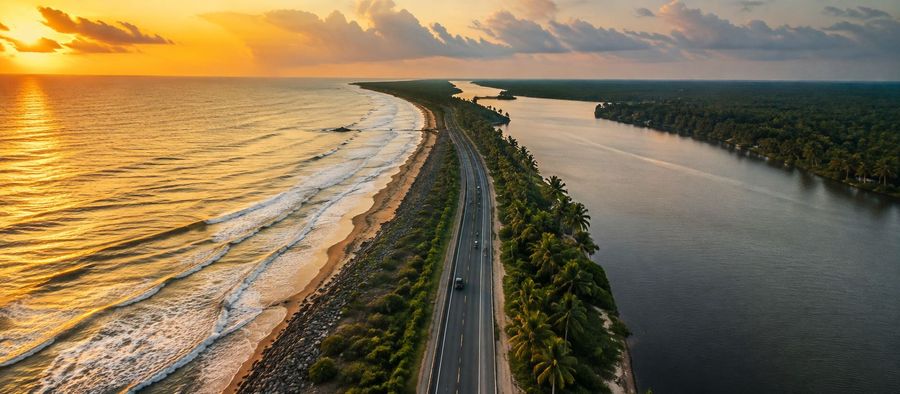
For nearly a kilometre, National Highway 66 has nothing but tarmac separating the Arabian Sea from the Souparnika River — a configuration genuinely rare enough to be considered one of a kind in India.
Maravanthe
Illustrative AI image of the region.
About This Destination
Maravanthe is a coastal village in Udupi district's Byndoor taluk, known for one specific, genuinely rare feature: National Highway 66 running on a narrow strip of land with the Arabian Sea on one side and the Souparnika River on the other. It's less a destination built around activities and more a place defined entirely by what you see as you drive through it — often called Karnataka's "Virgin Beach" for staying largely undeveloped.
The Geography That Makes This Place
NH66 runs roughly 100 metres from the shoreline here, with the Arabian Sea rolling in on the west and the Souparnika River flowing almost parallel on the east — separated by nothing but the road, for close to a kilometre. The river makes a U-turn shortly after this stretch and joins the sea further downstream, rather than flowing directly into it here. To the east, the green slopes of the Kodachadri Hills form a striking backdrop — the same hills traditionally regarded as the site of Adi Shankaracharya's original vision of the Goddess, tied directly to the founding legend of Kollur's Mookambika Temple.
Two Names, One Genuinely Old Port
The name Maravanthe carries two explanations, neither definitively confirmed over the other. One traces it to the nearby Maharajaswamy Shri Varaha Temple on the Souparnika riverbank, housing three idols representing Vishnu's Varaha, Narasimha, and standard forms. The other is local legend, naming the area after Marasura, a demon king said to have troubled the region in ancient times.
Where to Stay
There are quite a good number of beach resorts here, ranging from budget-friendly to genuinely upscale, several with direct beach access.
Do you need assistance in booking these hotels? Do let us know.
Nearby
Maravanthe sits almost exactly between Udupi and Murudeshwar, making it a genuinely natural break on a coastal road trip.