Mekedatu: A River Narrow Enough for a Goat to Leap — and Fatal If You Try
The legend is charming. The river is genuinely dangerous. Here's how to see one of Karnataka's most dramatic river gorges without becoming a cautionary tale yourself.
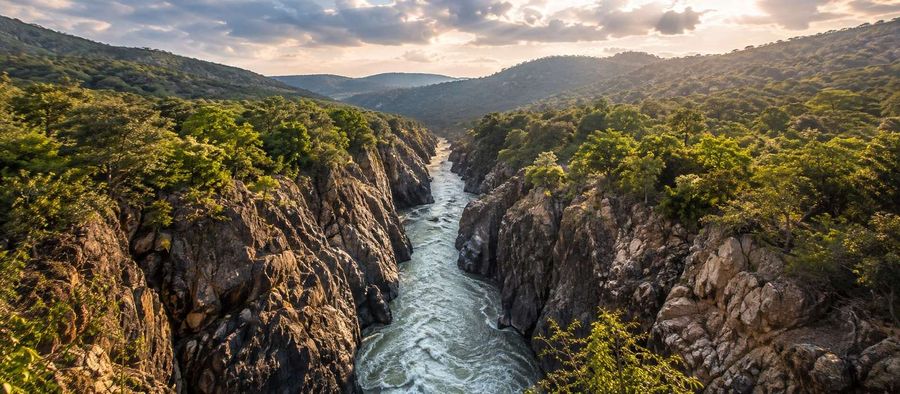
Mekedatu & Sangama
Illustrative AI image of the region.
Is Mekedatu Worth Visiting?
Yes, if you want to see the Cauvery at its most dramatic — a river over 150 metres wide at Sangama compressed into a roughly 10-metre granite gorge is a genuinely striking sight, backed by real mythology. No, if you're expecting to get close to the water or swim — this is strictly a viewpoint experience, and treating it otherwise has cost lives.
The Story, and How the Visit Actually Works
"Mekedatu" means "goat's leap" in Kannada — legend holds that a goat, fleeing a tiger, leapt across the narrow gorge to safety while the tiger didn't dare follow. In some versions, the goat was Lord Shiva in disguise, giving the spot religious weight alongside its scenery.
Sangama (start here)
Where the Arkavati river merges into the Cauvery — over 150 metres wide at this point. A coracle ride here is genuinely enjoyable, and there's a KSTDC canteen for snacks and lunch.
Mekedatu Gorge (roughly 3.5km downstream)
The same river, now squeezed to about 10 metres wide through granite rock — the actual "goat's leap" point, and the reason for the trip.
Where to Stay
Hotel Mayura Sangama, Mekedatu
A mixed-format property close to Mekedatu — 10 air-conditioned rooms, 4 double rooms, and a 14-bed dormitory (a genuinely useful option for larger groups), some rooms with river-view balconies.
View This KSTDC HotelWhere to Eat
The KSTDC canteen at Sangama covers snacks and a simple lunch — fresh fried fish is a locally recommended pick. Beyond that, dining options are limited, so plan around the canteen or the Mayura Sangama's own restaurant rather than expecting much else.
A Good Base for Sangama & Mekedatu
Hotel Mayura Sangama, including its dormitory option, is well suited to both couples and larger groups. Check availability with us before your trip.