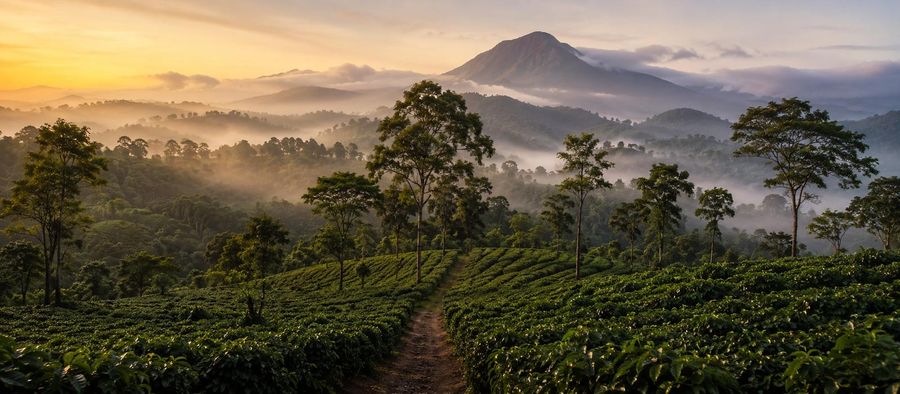
Kudremukh: A Peak That Guided Ships for 2,000 Years
Karnataka's third-highest peak, shaped like a horse's face, paired with a temple town linked to the very wedding of Shiva and Parvati — two genuinely distinct experiences, a short drive apart.
Kudremukh & Kalasa
Illustrative AI image of the region.
About This Destination
Kudremukh and Kalasa sit together in Chikkamagaluru district's Western Ghats, roughly 8-20km apart, and pair naturally into a single trip — Kudremukh for its national park and horse-face peak, Kalasa for its riverside Shiva temple and genuine mythological depth.
Kudremukh — Karnataka's Third-Highest Peak
Kudremukh means "horse face" in Kannada, named for the peak's distinctive resemblance to a horse's face from certain angles. At 1,894 metres, it's Karnataka's third-highest peak — and for nearly 2,000 years, it served as a genuine navigational landmark for mariners sailing along the western coast, long before it became a trekking destination.
A UNESCO-Linked National Park
Established as a reserve by the British in 1916 to protect tiger habitat, Kudremukh National Park spans roughly 600 sq km, linked to the Western Ghats' UNESCO status, home to the lion-tailed macaque and Malabar grey hornbill.
An Industrial Past, Now Conserved
Iron ore mining operated in the region through the 1970s before conservation priorities took over — a genuine industrial chapter in the park's history, not just untouched wilderness.
Trekking here requires Forest Department permission. Like several other Western Ghats trails in this region, casual unpermitted trekking isn't the norm — arrange this properly before you go.
Why is Kudremukh called the horse-face peak?
Kudremukh means 'horse face' in Kannada, named for the peak's distinctive resemblance to a horse's face when viewed from a particular angle. At 1,894 metres, it's Karnataka's third-highest peak, and was historically used as a navigational landmark by mariners along the western coast for nearly 2,000 years.
Is Kudremukh National Park a protected wildlife area?
Yes — established as a natural reserve by the British in 1916 to protect tiger habitat, it now spans roughly 600 square kilometres and is the second-largest wildlife-protected area in the Western Ghats, linked to the range's UNESCO World Heritage status. It's home to endangered species including the lion-tailed macaque and Malabar grey hornbill. The park also has an industrial history — iron ore mining operated here through the 1970s before conservation priorities took over.
Kalasa — Where a Sage Watched a Wedding
Kalasa sits on the banks of the Bhadra River and is home to the Kalaseshwara Temple, dedicated to Shiva, with two related legends explaining the town's origin. One holds that the sage Agastya was mystically born from a kalash (water pot), giving the town its name. The other explains why he came south at all: during Shiva and Parvati's wedding in the Himalayas, the sheer number of gods and goddesses attending caused an imbalance in the earth, and Shiva asked Agastya to move south to restore balance — Agastya settled at Kalasa and is said to have watched the wedding from there. An annual reenactment of the marriage is held on Karthika Shuddha Ekadasi.
Rudra Tirtha~5 km
Vasishtha Tirtha~6 km
Amba Tirtha~8 km
Varaha Tirtha~30 km
Naga Tirtha~35 km
What is the legend behind Kalasa's name and its Kalaseshwara Temple?
Two related legends exist. One holds that the sage Agastya was mystically born from a kalash (water pot), giving the town its name. The other explains why Agastya travelled south at all: during Shiva and Parvati's wedding in the Himalayas, the sheer number of gods and goddesses attending caused an imbalance in the earth, and Shiva asked Agastya to move south to restore balance — Agastya settled at Kalasa and is said to have watched the wedding from there. An annual reenactment of the marriage is held on Karthika Shuddha Ekadasi.
What are the Panchatirtha near Kalasa?
Five sacred ponds associated with Kalasa: Rudra Tirtha (about 5km away), Vasishtha Tirtha (6km), Amba Tirtha (8km), Varaha Tirtha (30km), and Naga Tirtha (35km) — a genuine pilgrimage circuit for those wanting to visit beyond the main temple.
Where to Stay
There are quite a good number of homestays and resorts here, given the strong coffee-estate hospitality culture of this part of the Western Ghats.
Golden Hills ResortHilltop location, well-established
Coffee Grove ResortAmid coffee plantations
Honey Dewz Exotica ResortTea plantations, pool, multi-cuisine restaurant
Bynekaadu Estate ResortWooden interiors, kayaking and trekking desk
Do you need assistance in booking these hotels? Do let us know.